
Equipment
Interpretation equipment
A multilingual session needs a transmitter, a channel for each language, receivers people can wear, and a workable place for the interpreters. Treated as its own system, it does not fight the room sound.
Where it usually fits
- Multilingual conferences
- International meetings
- Training in more than one language
- Hearings and assemblies
Receivers and transmitters
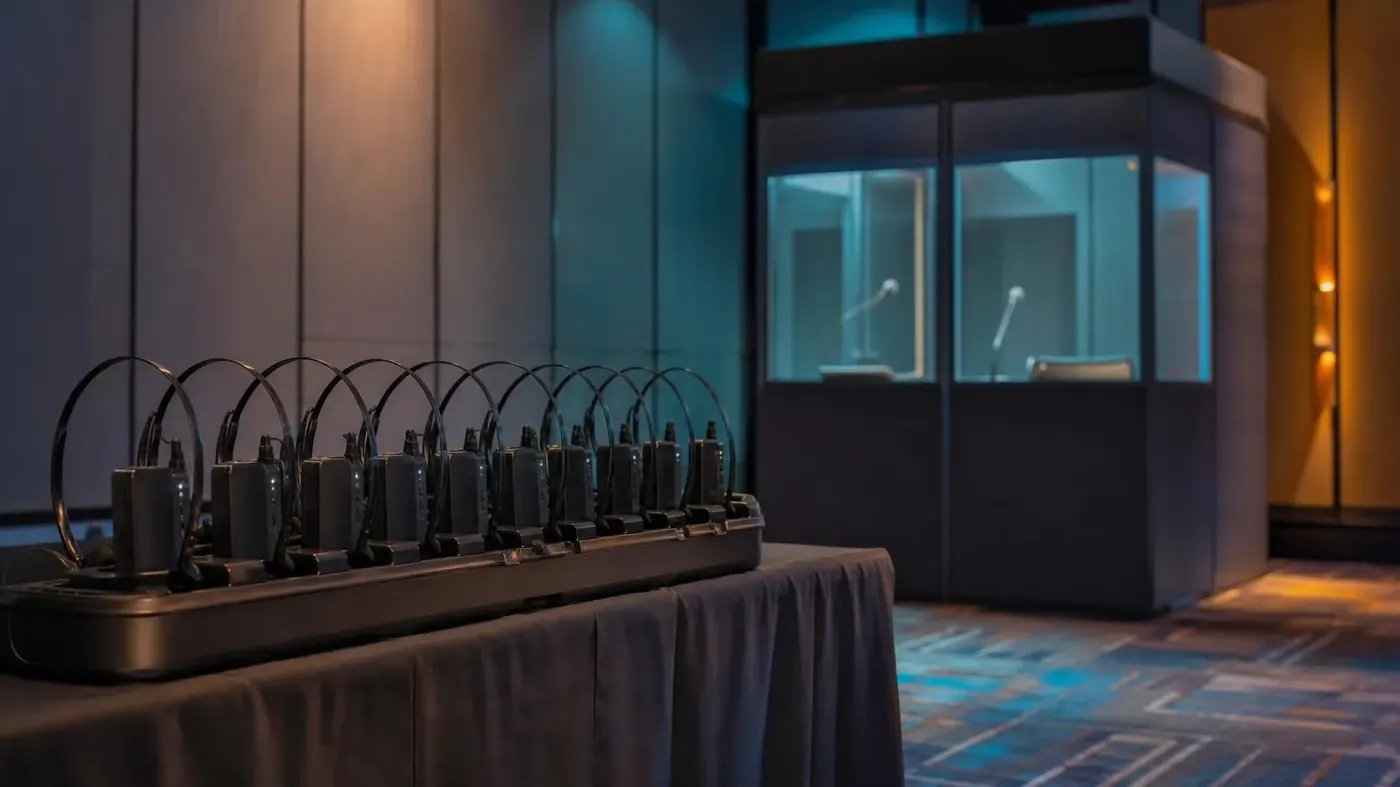
Wireless receivers and headsets for the audience, with transmitters covering the languages you actually need. Count headsets for attendees, not just for the largest language, and add a small spare pool.
- One channel per language, labeled in plain words
- Headsets for the audience plus a spare percentage
- Charging or fresh batteries before the event starts
Interpreter stations
Consoles, and booths when the room and the budget call for them. Interpreters need the floor audio cleanly, and the room needs to not hear the booth.
- How many languages are live at once
- Booth, table, or a quiet adjacent room
- A feed from the room microphones, not a camera mic
What to tell us
- Languages and which ones are simultaneous
- Audience count per language if you know it
- Where interpreters can sit with a view of the speaker
- How receivers will be handed out and collected
Often quoted with
- Sound & mics
Speakers, mixers, and wireless microphones for presentations, panels, and small stages.
- Cameras, streaming & conferencing
Room cameras, capture, and streaming gear for hybrid meetings and recorded sessions.
Tell us about the room.
Dates, venue, and what the session is for. We will come back with a practical gear list.